

Update April 2026
Italy reduces emissions, but not fast enough.
Europe revises 2035 target.
Misinformation about electric has not stopped.
Nearly three years after the original article, the basic question remains the same: Are political, financial and media choices really accompanying the transition to net zero goals? The picture has evolved, in some cases for the better, in others not. Here’s an update.
Net zero – emissions: something is moving, but not enough
By 2024, national greenhouse gas emissions were 30 percent below 1990 levels, down 3.6 percent from 2023, to just over 360 million tons of CO₂ equivalent. The result is linked to the increasing spread of renewable sources, particularly hydro and wind power, improved energy efficiency and the gradual replacement of the most emissive fuels.
This is real progress, currently not yet enough. Projections indicate that the European target for 2030 (55% reduction from 1990 levels) will not be met. Continuing with current policies, in five years Italy will be emitting 42% less than in 1990, while additional efforts could reach -53%, slightly below the target.
On the renewables front in Italy, the growth recorded was largely driven by the Superbonus and the renovation bonus, then concentrated in small domestic photovoltaic systems. A useful measure but leading to a structural change in the Italian system.
Net zero – What the policy does: lights and shadows
The bottleneck remains normative.
The complaint that Legambiente was making in 2023 (a permitting system that blocks plant construction in the face of huge demands) is still partially valid in 2026, although something is moving.
A June 2024 decree set annual targets for capacity from renewable sources in each Italian region, reaching a total of 80 GW in 2030. A step in the right direction, but one that will have to contend with the timing of the permitting process. In the opposite direction, a decree law adopted in May 2024 severely restricts the installation of solar power plants on agricultural land.
The transportation sector remains the most critical. Renewable sources met just 5 percent of final consumption in the transportation sector, the lowest share among all sectors in Italy.
Net zero – Financial choices: fossil continues to attract capital
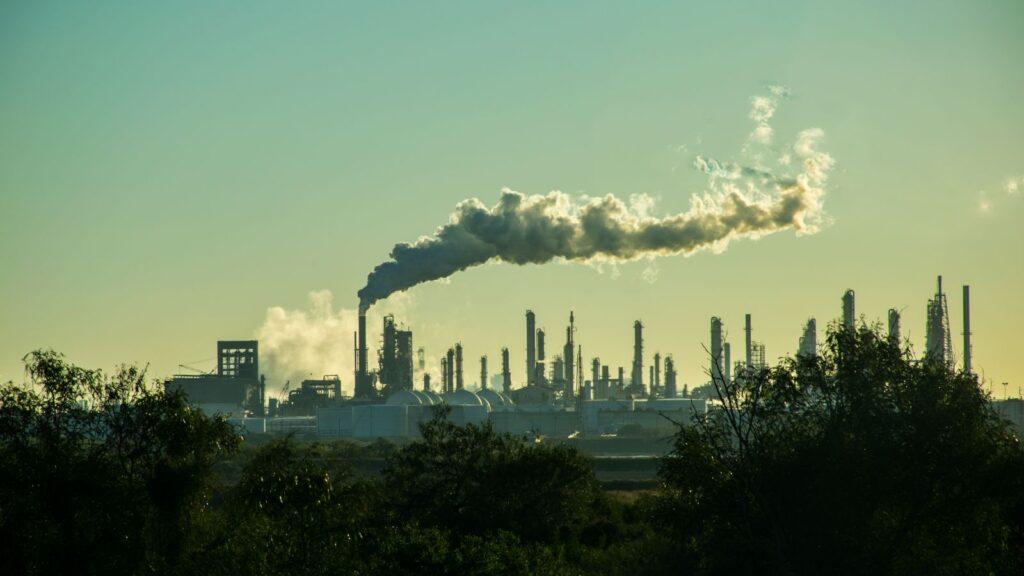
In 2023 we cited the report Banking on Climate Chaos, which documented $5.5 trillion allocated to fossil fuel by the world’s major banks in the previous seven years. The trend has not reversed.
Added to this is a geopolitical element new to net zero: the U.S. exit from the Paris Agreement under the Trump administration, with the consequent dismantling of the Inflation Reduction Act, has removed one of the most powerful stimuli to the global transition. The global scenario is further complicated: countries such as China, India, and Russia have only slightly declining emissions, and the U.S. exit from the Paris Agreement adds uncertainty in a context where massive and timely efforts would be needed.
Media choices: the narrative changes, but the reflections remain
The “war on electric” in the Italian media that we documented in 2023 has evolved somewhat. The debate is no longer “electric works or it doesn’t,” on that the numbers have answered. The new frontier of misinformation has shifted to issues such as dependence on China for batteries, the environmental sustainability of battery, wallbox, and accumulator production, and the reevaluation of e-fuels as a viable alternative in the short term.
On this last point, it is worth being clear: e-fuels do not ensure a zero-emission impact because they require a highly energy-intensive process to be produced and are not at present economically viable for everyday use in the private context. Their inclusion in the European regulatory review responds more to industrial and political logic than to a technical assessment of their climate effectiveness.
Net zero: right direction at a wrong pace
The 2026 picture for net zero is more complex than the 2023 picture, not necessarily worse, but more ambiguous. Emissions fall, renewables grow, the electricity market moves. At the same time, targets are softened, deadlines slip, and capital continues to flow to fossil fuels.
Between 2005 and 2023, Italy achieved a 34.8 percent reduction in net emissions, higher than the EU average reduction of 30.5 percent over the same period. We are not off to a bad start. The risk is that we settle for being in the EU average instead of looking at tomorrow’s average.
Sources:
ISPRA – National Greenhouse Gas Emissions Inventory 2024;
Italy for Climate / QualEnergia.it – “What’s the wind blowing on decarbonization in Italy?” November 2025;
European Parliament – Italy’s Climate Action Strategy, 2024;
Quattroruote / Vaielettrico – EU CO₂ regulatory review, December 2025;
Il Sole 24 Ore – “Reducing CO₂ emissions in Italy,” October 2025.
Updated April 2026.


