Wallbox for employee parking: is it a good choice?
The spread of electric and plug-in cars is no longer just about corporate fleets. More and more employees are also choosing an electric vehicle for private use, driven by incentives, lower operating costs and more mature environmental policies. In this context, the company parking lot becomes a natural place to complete charging, which often starts at home and is not always sufficient to cover the entire day’s commute.
Installing dedicated wallboxes in employee parking lots enables companies to improve welfare, attract and retain talent, giving a concrete signal of commitment to sustainability.
Why install wallboxes in corporate parking lots
Home charging remains central, but it is not always enough. Those who use their cars for long commutes, client visits, or nonstandard shifts may need to supplement charging during working hours. The workplace becomes the second ideal place to recharge the electric vehicle.
Companies that choose to offer an electric car charging service gain several advantages.
- enhance corporate welfare by integrating charging into a concrete benefits package;
- demonstrate commitment to sustainability with action that is visible and understandable to all;
- differ in talent retention, particularly among profiles sensitive to environmental issues and quality of life;
- can access tax benefits and environmental incentives when current regulations allow.
Wallboxes for employee parking lots:the main wallbox configurations for corporate parking lots
There is no one model that applies to all companies. The configuration of corporate wallboxes depends on the number of employees, presence of corporate fleets, power availability, and internal welfare policies.
There are three typical scenarios.
1. One or two shared wallboxes
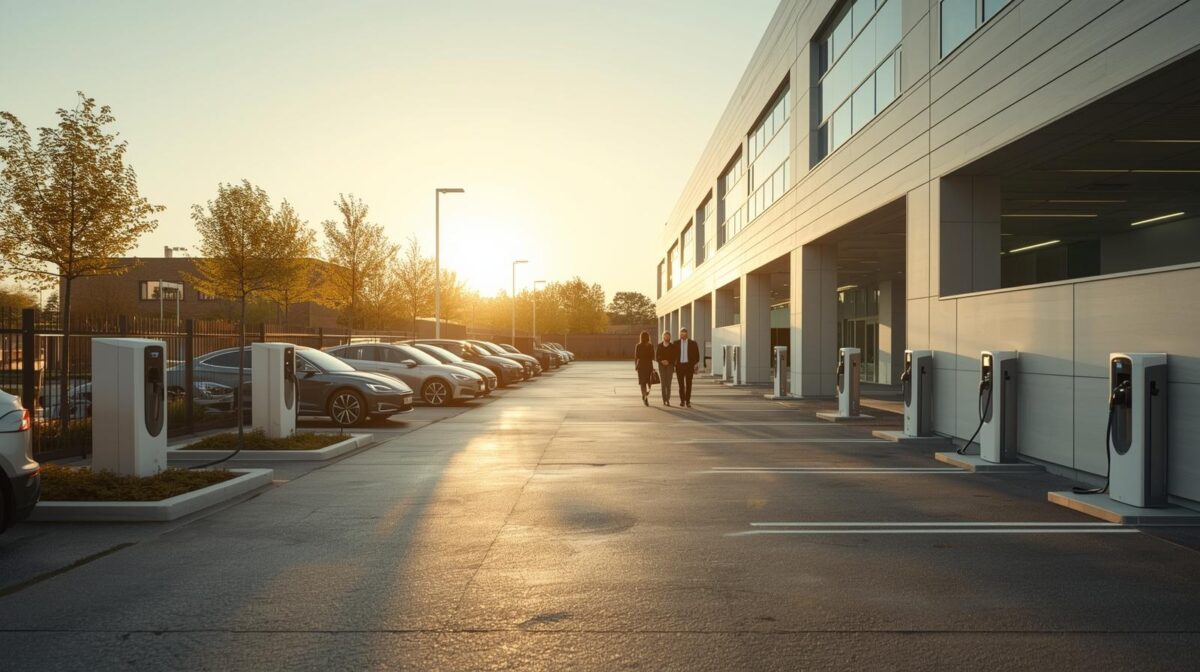
It is the most suitable solution for small and medium-sized enterprises or satellite locations with few parking spaces. Employee parking wallboxes are centrally installed and used in shifts by employees who need them. It can also be a structured company’s first step, allowing it to test real demand without committing to an extensive infrastructure right away.
Key features of this solution include:
- Controlled access via RFID or app;
- Simple management of enabled users,
- Prevalent charging during working hours with scheduled slots.
2. Dedicated points for company cars
In the presence of an electric company fleet, it makes sense to provide dedicated stations for service vehicles. In this case, wallboxes are assigned to specific vehicles or a group of vehicles rotating on the same parking spaces.
The key features are:
- restricted access;
- Automatic session management;
- Integration with fleet planning systems.
3. Charging for employees with private electric cars
In medium and large enterprises, a third possibility opens up: charging as a benefit for employees with private vehicles. In this scenario, the company provides wallboxes for employee parking and defines an internal policy on costs, consumption limits and possible reimbursement.
It can be managed as a service included in the welfare package, a benefit regulated by a kWh threshold, or as a recharge reimbursed based on recorded consumption.

Wallbox for employee parking: the technical requirements of corporate parking with wallboxes
The technical basis of an employee charging facility is similar to that of a fleet, with some caveats on access and consumption tracking. The most common power ratings are 7.4 kW for single-phase locations, 11 kW o 22 kW for three-phase installations. The choice depends on available power, number of charging points, and average vehicle dwell times.
From the planting point of view, they are needed:
- Dedicated lines for each wallbox,
- protections in the framework complying with IEC 64-8,
- Proper grounding and protective devices for fault currents.
For user access, typical solutions are:
- RFID, with customized badges or integration with corporate badge,
- app with individual employee access management.
A management backend, such as a centralized portal, allows the user to view active wallboxes in real time, associate each charging session with a user, extract reports for individual consumption, and set any limits or time slots.
To avoid disconnections when multiple wallboxes are activated at the same time, a Dynamic Load Management system that distributes available power among locations is essential. This makes it possible to increase the number of charging points without having to raise the supply to very high levels right away.
Integration with corporate welfare systems
Recharging for employees can become a structural part of the welfare plan, on par with other services offered by the company. Depending on the applicable tax regulations, recharging can be treated as a fringe benefit within certain thresholds or as a company service linked to energy items.
Integration with welfare provides a concrete benefit, contributes to the company’s ESG goals, and strengthens employer branding by showing attention to environmental issues and workforce needs. To make this manageable, however, it is necessary to be able to accurately associate consumption and users, with clear reports for HR and administration.
Silla solutions: wallbox for employee parking lots
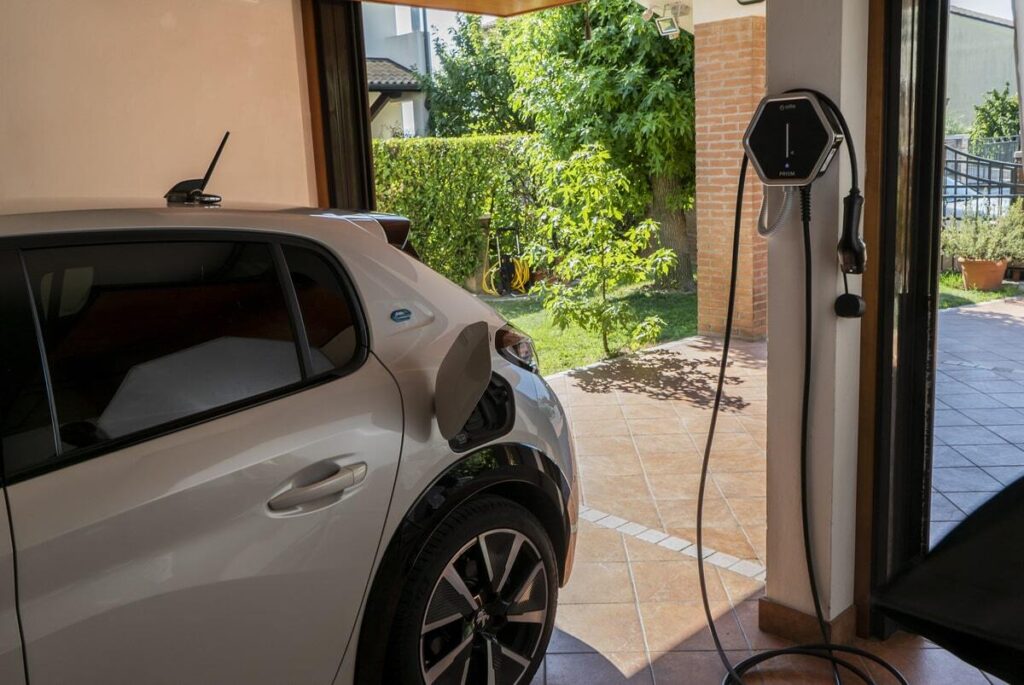
Silla Industries’ Prism wallboxes and the Silla Monitor Portal are designed for enterprise settings where control, reliability and scalability are needed. The Prisms enable outdoor installations with IP55 rating or indoor installations in covered parking lots, access management with RFID or user whitelisting, and configurations from 7.4 to 22 kW depending on the installation.
Silla’s Monitor Portal enables easy, centralized management of all company charging points. From a single interface it is possible to enable or revoke users, consult detailed monthly reports on consumption broken down by person, vehicle or department, and remotely control each session, intervening with start, stop or power adjustment commands. The system also supports mixed configurations, seamlessly integrating both wallboxes installed in the company parking lot and those in employees’ homes in the case of energy fringe benefits.
Would you like to implement an efficient charging solution for your employees?
We are available to support you in designing a reliable, scalable infrastructure that is integrated with your business needs.