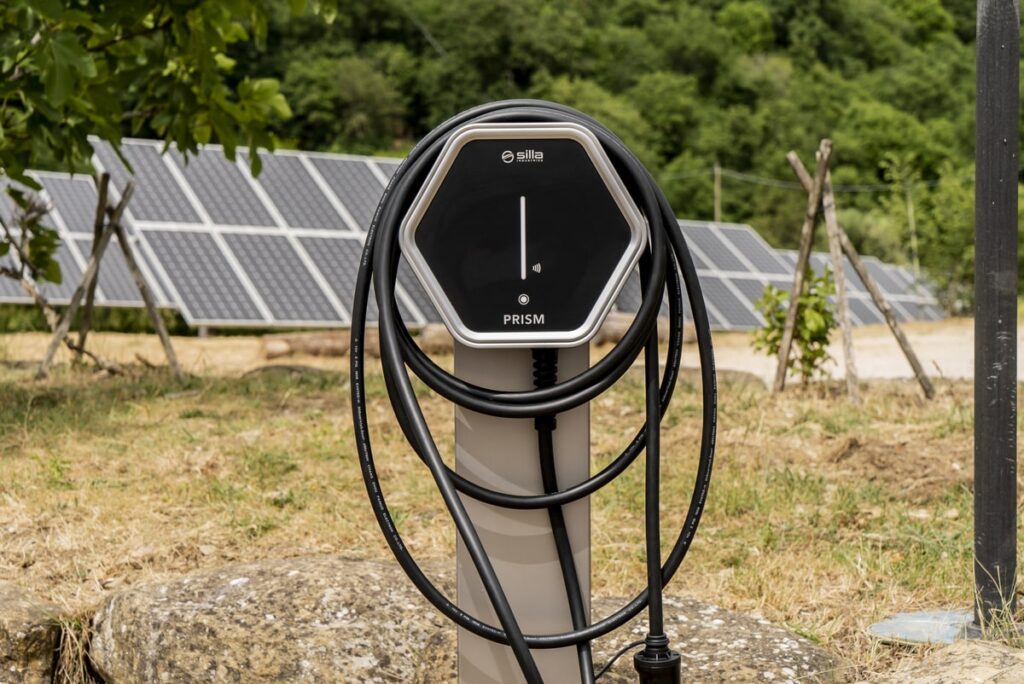
Charging colonins in Europe 2026
Update April 2026 – Latest data from ChargeUp Europe, EAFO, gridX and Rabobank
When ChargeUp Europe published its“State of the industry Report 2023” in2023 citing 475,000 charging stations in Europe (public), the growth already seemed impressive. Two years later, that figure has more than doubled.
The year 2025 ended with more than 1.2 million public charging points on the continent, a figure that is telling of both the speed of transformation in the sector and the distance that still separates the current infrastructure from the targets set by the European Union for 2030.
Charging columns in Europe in 2026: growing power, not just quantity
The pace of installation remains strong and is changing in nature. Growth in DC fast chargers has reached 38.5%, more than double the +15.3% growth in AC chargers. Ultra-fast chargers (≥150 kW) now account for 11.8% of all public points, up from 9.4% in 2024.
No longer just building in quantity: focusing on speed, power and strategic positioning along traffic corridors. By 2024, DC fast chargers exceeded 135,000 charging points, with growth far outpacing that of AC chargers.
Geographic distribution: dominance persists, East accelerates
As in 2023, the geographic distribution of charging stations in Europe remains unbalanced but the picture has evolved. Germany led total installations and new DC chargers in 2024, with France immediately behind. The Netherlands and Belgium dominated on the AC front, rounding out the four countries pulling the top group.
The big news is the emergence of Eastern Europe. The Czech Republic experienced the greatest growth in new BEV registrations (+82%), while Latvia (+142.8%), Estonia (+122.9%) and Poland (+103.7%) led the growth in DC fast charger installations. Markets that were little more than a statistical appendix in 2023 are becoming major players in the transition.
On the density front, the Netherlands remains the best equipped market in Europe, with 202,833 public charging points and a density of 11 per 1,000 inhabitants.
Private charging: where the transition really happens
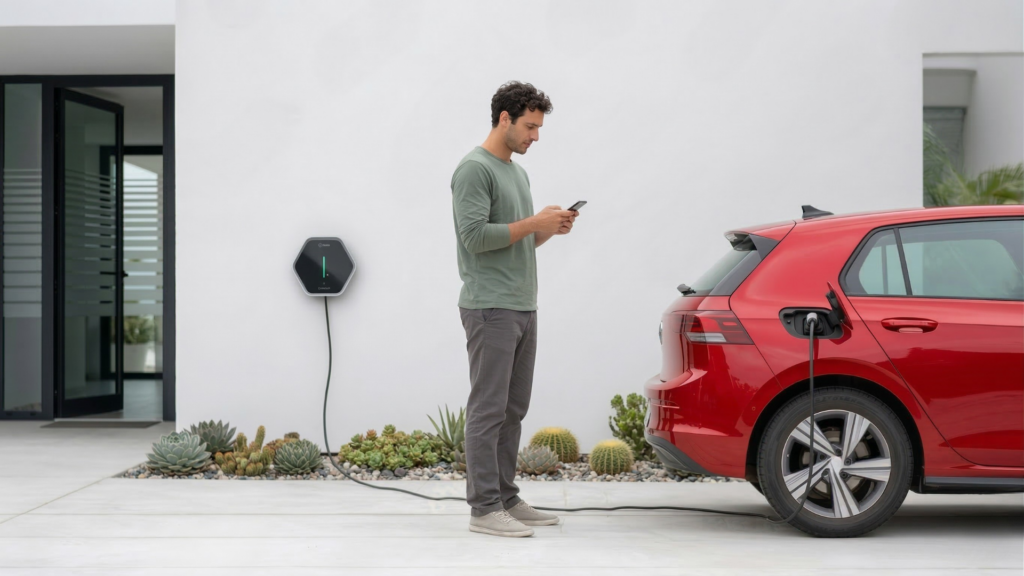
The 2023 report cited 3 million home infrastructures. That figure has more than doubled. By the end of 2025 there were 7.5 million private charging points across the EU: more than 9 out of 10 are in private locations. By 2035, this is expected to reach 37 million.
The reason is structural. Seventy percent of electric vehicle charging in Europe takes place at home or work, where costs are lower and convenience is highest. Public charging is essential for travel, but day-to-day operations play out within the walls of the home or office.
Recharging in the workplace: the potential yet to be expressed
Corporate fleets, including leased and rented cars, accounted for about 60 percent of all new registrations in Europe in 2025. Of these, 12.4 percent of new corporate registrations were BEVs, compared to 13.8 percent for individuals.
A sign of growth but with wide margins to be expressed in the business segment, with an increased willingness on the part of companies to offer smart charging solutions in work environments. Business charging often remains the only real alternative for those who live in an apartment building without private parking and cannot install a home wallbox.
Charging columns in Europe in 2026 – target 2030: the challenge is open
AFIR envisions fast-charging stations every 60 km along the TEN-T network with a minimum power output of 150 kW, with mandatory contactless payment without the need for a subscription. A concrete change for travelers: fewer barriers to access, more transparency on prices.
On the 2030 targets front, the debate is heated. The European Commission aims for 3.5 million charging stations in Europe by 2030, a target that would require about 410,000 new installations per year, nearly three times the current rate. In contrast, ACEA argues that at least 8.8 million will be needed.
The composition of the network also requires attention. As of December 31, 2024, the EU had more than 882,000 public points, of which 16 percent were DC and 84 percent AC. Only 40% of highway service areas are currently equipped with charging infrastructure.
Charging stations in Europe in 2026: a growing market
By 2024, one in four cars sold in Europe was electric, with 9.3 million BEVs and 5.2 million PHEVs on the roads. By 2030, the total electric fleet in major European markets is expected to reach 50 million vehicles.
Sources – updated April 2026
Sources: gridX – EV Charging Report 2026(evinfrastructurenews.com); ChargeUp Europe – State of the Industry 2025(evcandi.com); ACEA and Transport & Environment via infobuildenergia.co.uk; Statzon / EAFO data 2024(statzon.com); Rabobank Research – From niche to norm, 2025(rabobank.com). EV charger masterplan – EU(Research-Whitepaper-A-European-EV-Charging-Infrastructure-Masterplan.pdf)
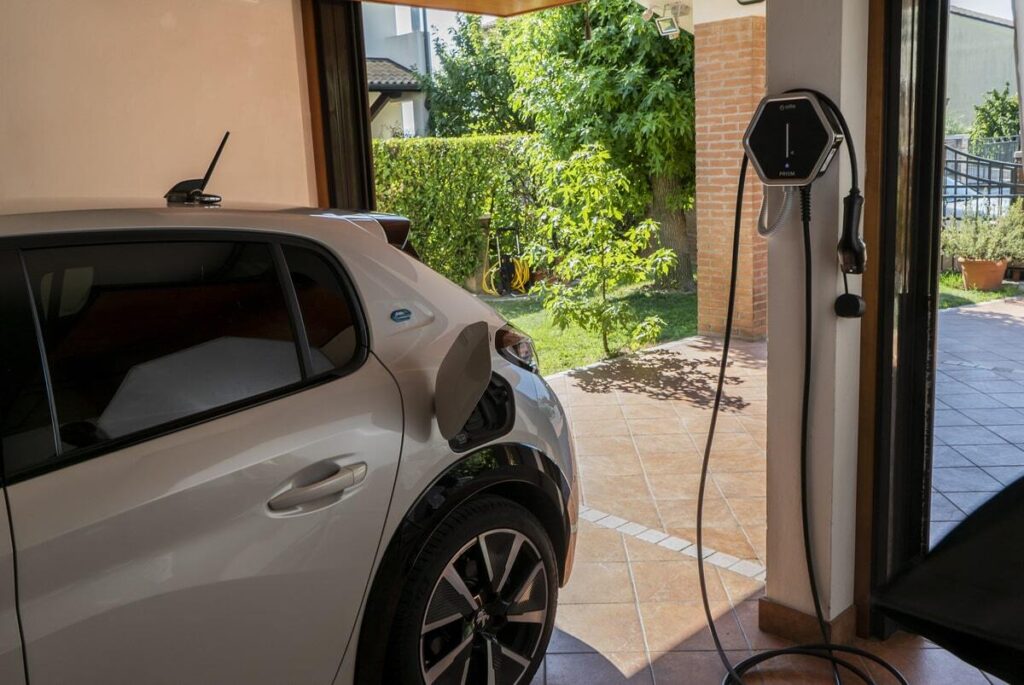
Home charging infrastructure has become an integral part of everyday mobility.